

Birmingham: Growth, Challenges & Green Future
Birmingham is a vibrant city located in the heart of England known for its rich industrial heritage and diverse cultural scene. It is celebrated for its impressive architecture, bustling shopping districts, and thriving arts community. As one of the United Kingdom’s major urban centers, Birmingham offers a dynamic blend of history and modern innovation. The city is also renowned for its culinary variety and lively music venues.
Birmingham Key Statistics Overview
Birmingham Population Statistics
In 2018, Birmingham had a population of 1,139,249. Over the previous five years, its population grew by 4.6%, indicating a growing trend. This growth rate is lower compared to Amsterdam, which experienced a 7.7% increase during the same period. However, Birmingham's population growth outpaced Valencia, which grew by 3.3%. The city's population growth rate reflects a moderate increase compared to the European average.
Population Over Time
Chart loading...
Birmingham Employment & Jobs Data
In 2018, Birmingham had an unemployment rate of 7.7%, which is around the European average. However, the city's unemployment situation has been deteriorating faster compared to other cities in the same country, such as Manchester and Leeds, both of which saw a 48.6% improvement. This indicates that Birmingham faced more challenges in reducing unemployment during that period. The data highlights a need for targeted job market interventions in Birmingham relative to its national peers.
Unemployment Rate Over Time
Chart loading...
Activity Rate Over Time
Chart loading...
Birmingham Tourism & Visitor Statistics
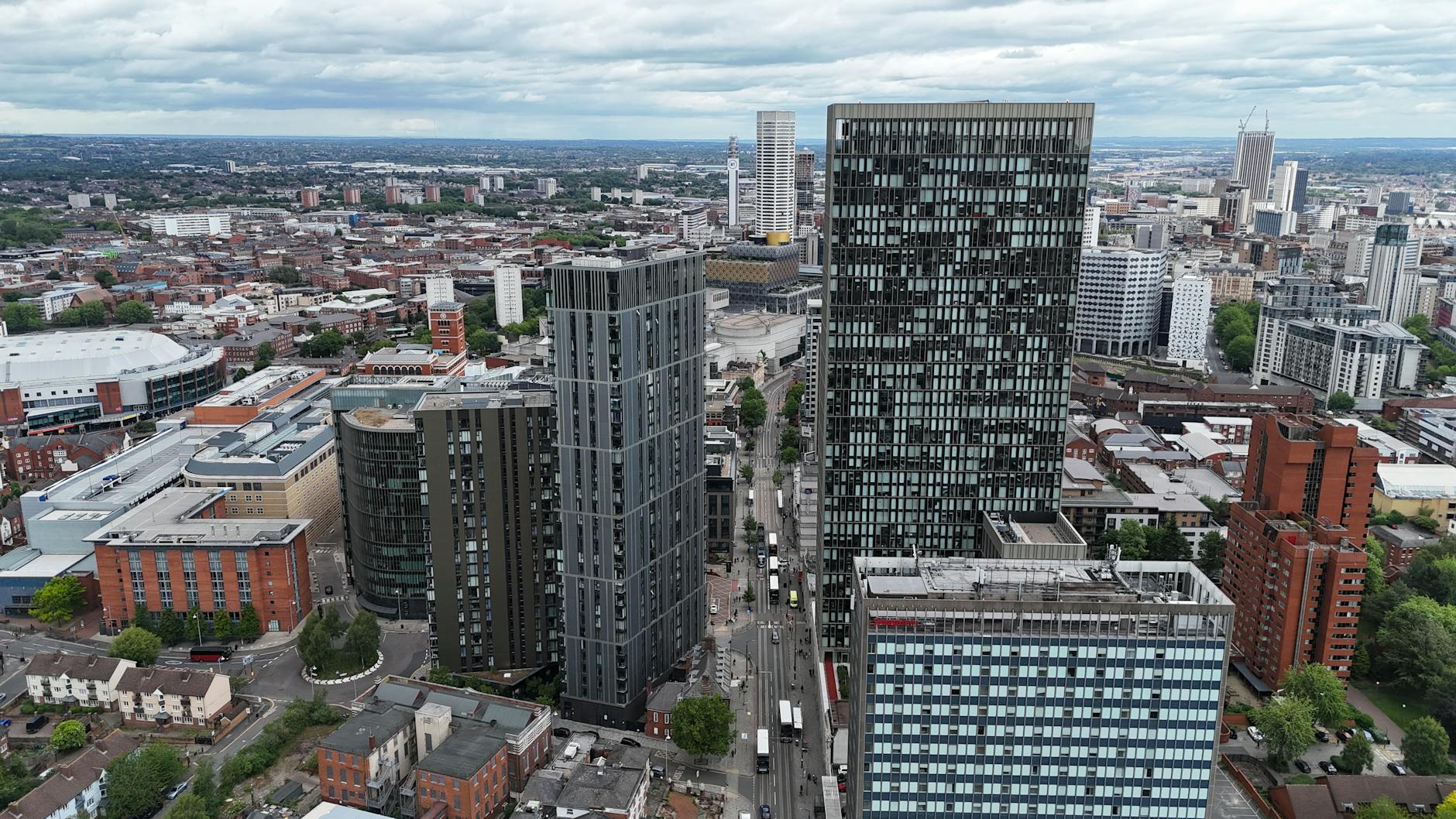
Photo by David Pickup | Advertising & Marketing 🇬🇧 on Pexels
In 2004, Birmingham recorded 1,717,900 tourism nights, indicating moderate tourism activity. This trend aligns closely with other cities in the same country. While Birmingham's tourism figures show steady engagement, they reflect a consistent pattern rather than a significant increase or decrease. Compared to the European average, the city's tourism activity can be considered moderate. Overall, Birmingham maintains a stable position in the national tourism landscape.
Tourism Nights Over Time
Chart loading...
Birmingham Environment & Air Quality Data
Birmingham's PM10 concentration in 2013 was 17.9 µg/m³, which is within EU limits. The city has shown a significant improvement in air quality, reducing PM10 levels by 44.4%. This improvement is greater than that of other UK cities such as Manchester and Leeds, which saw reductions of 17.8%. Compared to the European average, Birmingham's air pollution levels remain moderate. Overall, the data indicates positive trends in Birmingham's environmental quality.
Air Quality (PM10) Over Time
Chart loading...
Birmingham Statistics Summary
Birmingham stands out as a dynamic city blending its rich industrial past with a vibrant cultural and culinary scene. Its moderate population growth and steady tourism reflect a stable urban environment, while ongoing challenges in employment highlight areas for economic focus. Notably, Birmingham has made impressive strides in improving air quality, surpassing many national counterparts. Together, these factors underscore Birmingham's evolving character as a major UK city balancing growth, culture, and sustainability.