
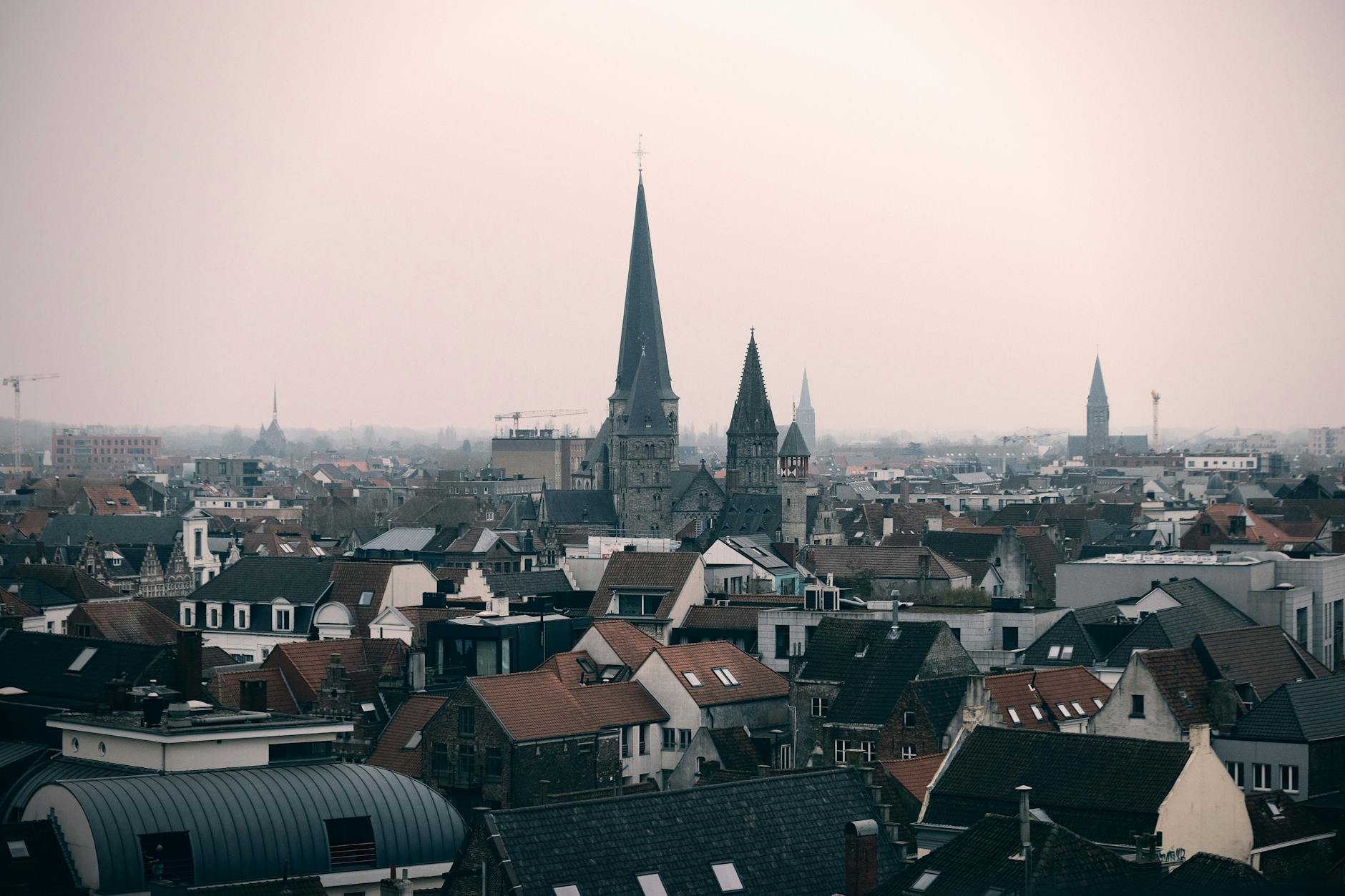
Ghent: Balancing Growth & Sustainability
Ghent is a vibrant city located in the heart of Belgium, renowned for its rich medieval architecture and lively cultural scene. This historic city blends old-world charm with modern innovation, featuring stunning canals and impressive landmarks. Known for its thriving arts community and bustling university atmosphere, Ghent offers a unique mix of tradition and creativity. Visitors and residents alike enjoy a dynamic urban experience set against a picturesque European backdrop.
Ghent Key Statistics Overview
Ghent Population Statistics
Ghent has a population of 270,133 in 2024, showing a 3.0% growth over the past five years, indicating a growing population. This growth rate is lower compared to Charleroi, which experienced a 19.0% increase in the same period. The city covers an area of 158 km², resulting in a population density of 1,710 people per km². Ghent's density is similar to other cities in its country but is 57% more spacious compared to the European average. Compared to European cities like Barcelona and Turin, Ghent has a significantly lower population density.
Population Over Time
Chart loading...
Population Density Over Time
Chart loading...
Ghent Employment & Jobs Data
In 2023, Ghent's unemployment rate was 5.4%, which is below the European average. The city has shown a stronger improvement in reducing unemployment compared to other cities in its country, such as Charleroi with a 31.3% decrease and Antwerp with a 24.6% decrease. This indicates a positive trend in Ghent's job market relative to these cities. The data reflects a favorable employment situation in Ghent compared to the broader European context.
Unemployment Rate Over Time
Chart loading...
Activity Rate Over Time
Chart loading...
Ghent Tourism & Visitor Statistics
In 2020, Ghent recorded 501,209 tourism nights, indicating low tourism activity. Compared to other cities in Belgium, Ghent lagged behind Charleroi, which had 269.4% more tourism nights, and Antwerp, with 25.1% more. This level of tourism is below the European average for similar cities. The data suggests that Ghent attracts fewer overnight visitors than some of its national counterparts. Overall, Ghent's tourism performance in 2020 was relatively modest within Belgium.
Tourism Nights Over Time
Chart loading...

Ghent Environment & Air Quality Data
Ghent's PM10 concentration in 2013 was 29.9 µg/m³, which is above the World Health Organization guideline but remains within European Union limits. This level of air pollution follows a similar trend to other cities in its country. Compared to the European average, Ghent's PM10 concentration is higher, indicating more particulate matter in the air. The data reflects ongoing environmental challenges related to air quality. Efforts to reduce PM10 levels are important for improving the city's environmental conditions.
Air Quality (PM10) Over Time
Chart loading...
Ghent Statistics Summary
Ghent stands out as a dynamic Belgian city that harmoniously combines historical beauty with modern vibrancy, supported by steady population growth and a favorable job market. Despite its rich cultural offerings, the city experiences modest tourism compared to other Belgian urban centers. Environmental challenges remain, particularly regarding air quality, highlighting the need for continued efforts to enhance sustainability. Overall, Ghent presents a balanced urban environment with promising social and economic developments amid ongoing ecological considerations.