
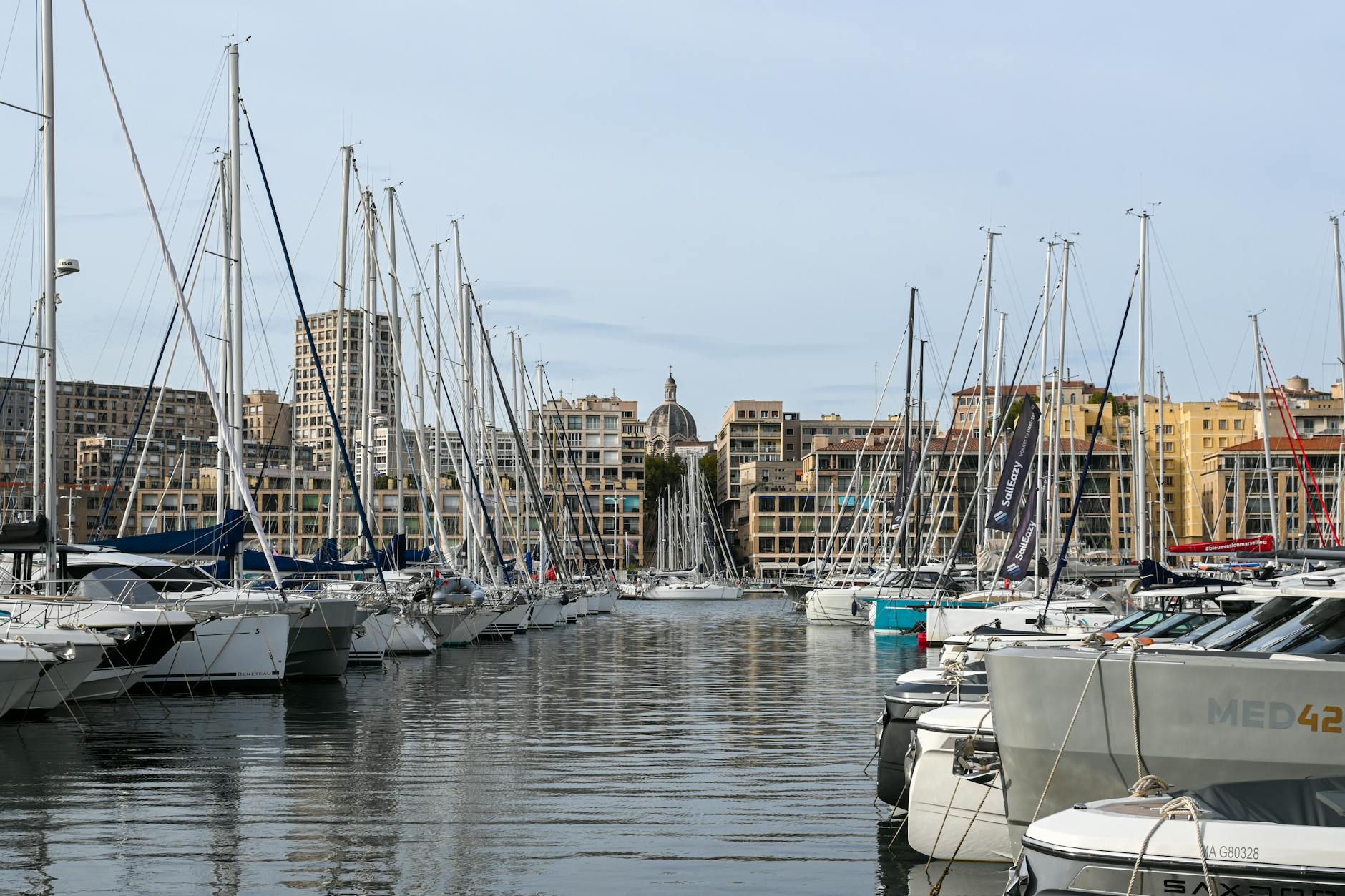
Marseille: Growth, Challenges & Coastal Charm
Marseille is a vibrant port city located on the southeastern coast of France along the Mediterranean Sea. Known for its rich maritime history and diverse cultural heritage, it serves as a key gateway between Europe and the Mediterranean region. The city is famous for its lively markets, historic architecture, and flavorful Provençal cuisine. Marseille combines a dynamic urban atmosphere with beautiful coastal landscapes, making it a unique destination in southern France.
Marseille Key Statistics Overview
Marseille Population Statistics
Marseille had a population of 976,483 in 2022, showing a stable growth trend of 1.8% over the past five years. This growth rate is slightly lower compared to Lille, which experienced a 2.0% increase, but higher than Turin's decline of 0.5% within the same country. The city covers an area of 356 km², resulting in a population density of 2,743 people per km². Marseille is 37% more spacious than other cities in the country, such as Lille and Lyon, and 30% more spacious compared to the European average. This density level indicates a transition toward suburban characteristics.
Population Over Time
Chart loading...
Population Density Over Time
Chart loading...
Marseille Employment & Jobs Data
In 2022, Marseille had an unemployment rate of 13.4%, which is above the European average. Despite this, the city showed a stronger improvement in reducing unemployment compared to other cities in its country, such as Lille with an 8.2% decrease and Lyon with a 14.7% decrease. This indicates positive job market trends in Marseille relative to these cities. The data reflects ongoing efforts to address unemployment challenges in the city. Marseille's job market remains a key area of focus for economic development.
Unemployment Rate Over Time
Chart loading...
Activity Rate Over Time
Chart loading...
Marseille Tourism & Visitor Statistics
In 2022, Marseille recorded 4,168,918 tourism nights, indicating moderate tourism activity. This figure shows Marseille outperforming other French cities such as Lille, which had 8.1% fewer tourism nights, and Lyon, with a slight increase of 0.7%. Compared to the European average, Marseille's tourism nights reflect a solid performance within the regional context. The city's ability to attract a substantial number of tourists highlights its significance as a destination in France. Overall, Marseille maintains a competitive position in the national tourism landscape.
Tourism Nights Over Time
Chart loading...

Marseille Environment & Air Quality Data
Marseille's PM10 concentration in 2013 was 29.2 micrograms per cubic meter, which is above the World Health Organization guideline but still within European Union limits. This indicates that air pollution levels in Marseille are relatively high compared to the European average. The city’s air quality has been deteriorating faster than other French cities such as Lille, which saw a 2.4% increase, and Lyon, with a 2.0% increase. These trends suggest growing environmental challenges related to air pollution in Marseille. Efforts to address these issues may be necessary to improve air quality in the city.
Air Quality (PM10) Over Time
Chart loading...
Marseille Statistics Summary
Marseille stands out as a dynamic Mediterranean port city with a rich cultural heritage and expanding population, offering a spacious urban environment compared to other major cities. While unemployment remains above average, notable improvements signal progress in the local job market. The city attracts a significant number of tourists, reinforcing its importance as a key destination in France. However, rising air pollution presents an environmental challenge that calls for continued attention to sustain Marseille’s growth and livability.