

Paris: Balancing Charm & Economic Challenges
Paris, the capital of France, is renowned worldwide for its rich history, iconic landmarks, and vibrant culture. Located in the northern part of the country, this city is famous for attractions like the Eiffel Tower, Louvre Museum, and charming neighborhoods. Paris is celebrated for its art, fashion, and culinary excellence, making it a top destination for travelers. Its blend of classic elegance and modern innovation creates a unique urban experience.
Paris Key Statistics Overview
Paris Population Statistics
In 2022, Paris had a population of 10,353,710, showing a stable trend with a 1.4% increase over five years. This growth is slower compared to London, which experienced a 6.0% increase in the same period. Paris covers an area of 2,021 km² and has a population density of 5,122 people per km². This density is 43% higher than other French cities like Lyon and Lille, and 33% above the European average. The moderate density supports good transit and walkability within the city.
Population Over Time
Chart loading...
Population Density Over Time
Chart loading...
Paris Employment & Jobs Data
In 2022, Paris had an unemployment rate of 11.4%, which is above the European average. The unemployment situation in Paris has deteriorated faster compared to other French cities such as Lyon, where unemployment decreased by 14.7%, and Marseille, which saw a 25.9% reduction. This indicates that job market conditions in Paris are more challenging relative to these cities. Overall, Paris faces higher unemployment challenges compared to the broader European context.
Unemployment Rate Over Time
Chart loading...
Activity Rate Over Time
Chart loading...
Paris Tourism & Visitor Statistics
In 2022, Paris recorded 71,423,725 tourism nights, indicating high tourism activity. This figure outperforms other cities in France, with Paris exceeding Lyon by 0.7% and Marseille by 26.7%. Compared to the European average, Paris demonstrates significantly stronger tourism performance. The city's ability to attract a large number of overnight visitors highlights its status as a leading tourist destination in Europe. These metrics reflect Paris's continued appeal to international and domestic travelers.
Tourism Nights Over Time
Chart loading...
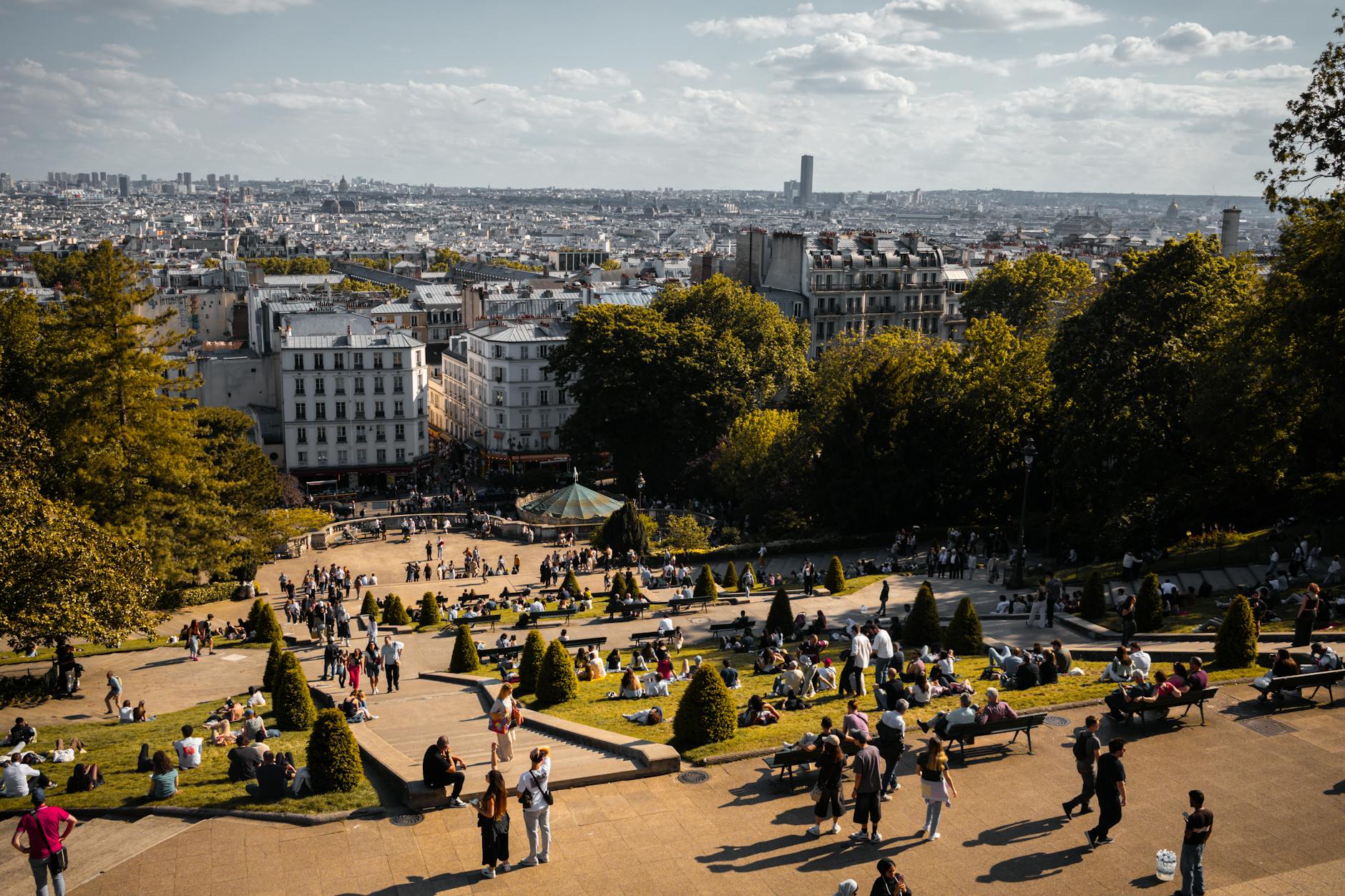
Photo by Tristan Wong on Pexels
Paris Statistics Summary
Paris stands as a vibrant metropolis that seamlessly combines historical charm with modern dynamism, attracting millions of visitors annually. Its dense population fosters a lively urban atmosphere supported by efficient transit and walkability, although the city faces notable employment challenges compared to other French and European cities. With its unparalleled cultural landmarks and strong tourism performance, Paris maintains its position as a premier destination in Europe. The city’s unique blend of tradition and innovation continues to define its global appeal and economic significance.